futures in sight
  • Welcome
  • News
  • Plan Management
    • How to choose the plan manger that is right for you?
    • Your NDIS Budget
    • in focus - plan management
    • What does that mean?
  • Coordination of Support
    • Brian's story
    • Brad's story
    • Georgia's story
    • Ohsha's story
  • About us
    • Our team
    • How we work
    • Annual Survey Results
  • Resources
    • Covid 19
  • Contact Us

Setting goals that stick

1/11/2021

0 Comments

 
Watching Nina's determination to be able to be a musician, writing and making music, made us want to focus on the importance of having goals and sticking to them.

So, what about goals?
Really, aren’t goals just the things you talk about in your plan meeting with the NDIA so you get the funding you need – and then you forget about it until your next planning meeting?
Well maybe, especially if the goals you have are not really goals that excite you.
So, lets talk about goals that make you go ‘Yes please!’ and “I really want that!’, just like Nina wants to be a musician!
 a dart in the bulls eye of a dart board
So let’s have a look at:
  1. Why do you want to set goals?
  2. What sort of goals to set yourself?
  3. And once you have goals, how will you know you are on track
  4. What about if you change your mind?
​1. Why set goals?
When we ask people why they set goals, most people gave reasons that are similar to these:
  • It gives me something to focus on
  • I feel like I am in control of my life
  • I have a sense of where I am going and what I am doing
  • Goals give me some control over my future
  • They make my life challenging and give me something to strive for

2. What sort of goals to set yourself?
The bottom line is: the goals you set yourself have to work for you. They have to excite you and get your through the tough times when you want to throw in the towel and give them all up.
People have talked about different types of goals and it might be good to have a mixture of the following different goals:
1. Lifetime Goals: these are the big goals of life and it might take you your whole life to achieve them, or at least a very long time. As you get older, your lifetime goals will probably change. Lifetime goals might be about family and relationships, about health and wellbeing, about how and where you live, work and play. Many of these big goals are about what’s really important to you and about the things you value.
2. Long-term Goals: think about these goals as being achievable in a 5-10 year period. For example, saving a huge amount of money, planning for a big life change, planning a career or wanting to get really good at something (did you know it takes 100,000 hours of practice to get really good at something. Things like golf, playing an instrument or painting.)
3. Short-term Goals: these goals are things you can achieve in a day, week, month or maybe a year. Getting fitter might be an example of such a goal, or eating less sugar, being kind to at least one person a day or helping another person.
4. Stepping-Stone Goals; these are smaller goals towards achieving bigger goals. Goals like doing 15 minutes of exercise and then doing 30 minutes. These goals build one on top of the other and with each stepping stone, you get closer to your goal.
When we work with you, we like to ask you to think about what makes a good life for you and help you come up with goals in three important, meaningful areas of life:
  • Having goals that are about something (meaningful) to do
  • Having goals about the people we love and want to connect with
  • Having goals about something to look forward to
3. How to keep on track?
​
Lots of people talk about SMART Goals and lots of us have heard about that, so let’s use it.
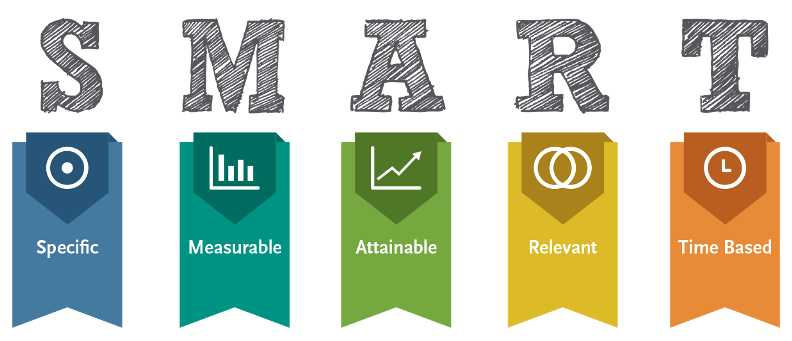
A Graphic with the words Smart up the top and then the words specific, measurable, attainable, relevant and time based
A SMART goal means that the goal is:

   S = Specific: “who, what, where, why”
   M = Measurable: “how many, how much, how will you know you have progressed”
   A = Achievable: but don't make it too easy
   R = Relevant: your goal has to excite you and matter to you
   T = Time bound: have a target date, a time in the future when you evaluate how you are going with   your goal

4. Is changing my mind about goals ok?
ABSOLUTELY!
Anyone who tells you that you can’t change your mind is stifling your creativity and cramping your style! 
Smart people change their minds, because they learn new stuff, hear about some interesting things they want to try out and are just curious about what life’s got to offer.
Don't change your goal just because your goal is hard, though, or because someone tells you your goal is a pipe-dream, or because you are starting to doubt yourself.
- If your goal is too easy to achieve, it’s probably not worth having
- If your goal does not excite you, it’s probably not worth having
- If your goal is really someone else’s goal or opinion, it’s probably not with having
But
- If you goal is hard but it makes your heart sing, stick with it!
- If you believe in your goal, stick with it!
- If your goal makes you happy, definitely stick with it!
​

Also stick with any goal that gives you fun and joy!
0 Comments

Going online with MyGov, NDIS , Medicare and Centrelink

25/10/2021

1 Comment

 
banner with Logos
Everything is online more and more. It seems if you are not, you are missing out.
 
Whether it’s your Covid 19 vaccination certificate or arranging to get your transport funding from your NDIS plan paid to you (if you have transport funding) you need to get yourself connected to the relevant government agencies.
 
Below, we collect a few good links and resources on how to get yourself set up.
myGov logo

​MyGov is the key to everything! It is the entry point for all other entry points.  To set yourself up, you need to start with My Gov.  
Go to this site to get started: You’ll find a video and a step-by-step guide and information in different languages.
To set yourself up you will need:
  • An email address
  • A mobile phone (if you don't have a mobile phone you can still make it work)
  • A password you will remember (or have written down in secure place that you will remember how to find)
  • 3 secret questions and answers tp those questions (you can choose from the options provided or make up your own questions and answers)
Follow the video and/or step by step guide to help you.

Once all that’s done, you will be sent your username and password to your email address and then you can start linking your other government services such a NDIS, Centrelink, Medicare and others
 
(Please note you can also now sign up for mygovID. mygovID like your digitial identity. If you want to know more try this link )
Picture

​​NDIS calls their online portal ‘myplace’.
You can set up a link from your myGov account that can connect you to your NDIS portal.
Once you are linked, you will be able to see things like
  • Your plan
  • Your budget
  • Your service bookings
  • You can add your bank details so you can receive your fortnightly transport payments (if you get those,  not everyone does)
  • And lots more
The NDIS has also created a step by step guide for all things on the 'myplace' portal and you can download the guide.  
The guide tells you:
  • How to link to  ‘myplace’ from myGov:  have a look at page 5 of the guide. And before you can set it all up, you need to call the NDIS 1800 800 110 to get your NDIS Activation Code. 
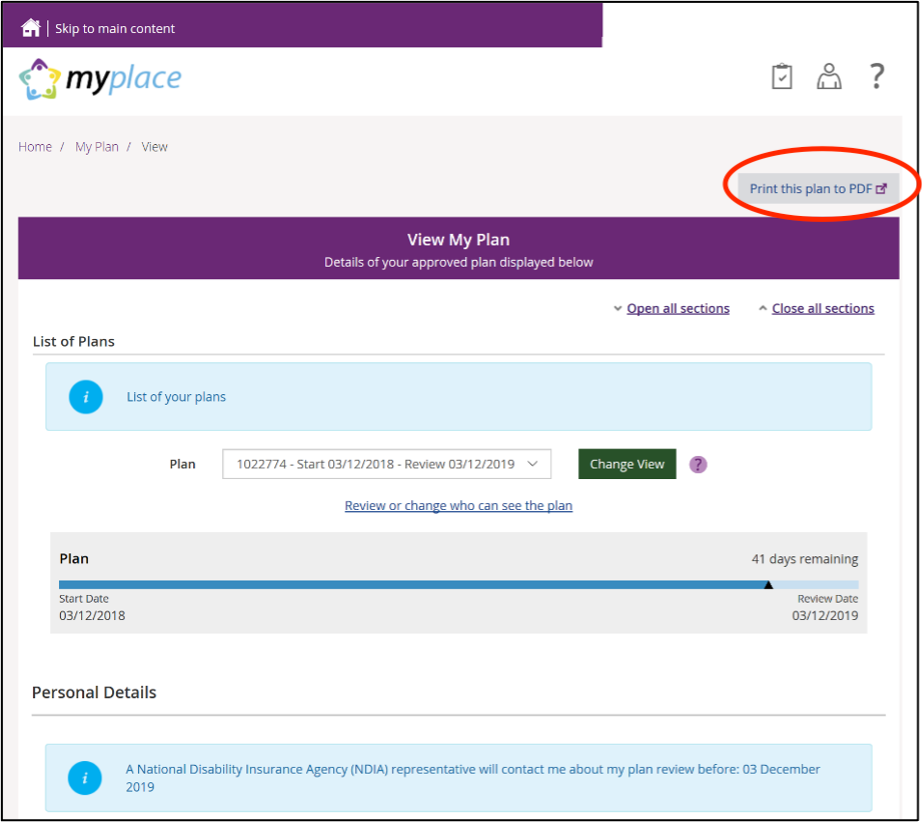
  • How to view your plan: Page 22 tells you everything about viewing your plan and here a screenshoot of  where you can download a pdf copy of your plan
  • How to add your bank details: If you have funding for transport in your plan it is likely that this comes as a fortnightly payment into your bank account. Check out Page 20 on how to add your details to make that happen
  • and loads more.
Picture
When you are ready to set it all up, you will need to call the NDIS 1800 800 110 to get a NDIS Activation Code.

If you want to read more, here is the link to the NDIS website where they keep everything to do with how to access your NDIS myplace portal.
Picture
​
​Link to medicare via myGov. Sign into myGov and then link to medicare.
To do this you will need
  • your Medicare card (if you don't have one you need to get one here )
  • your bank details 
  • details about your last (Medicare funded) doctor’s appointment (doctor's name and practice)

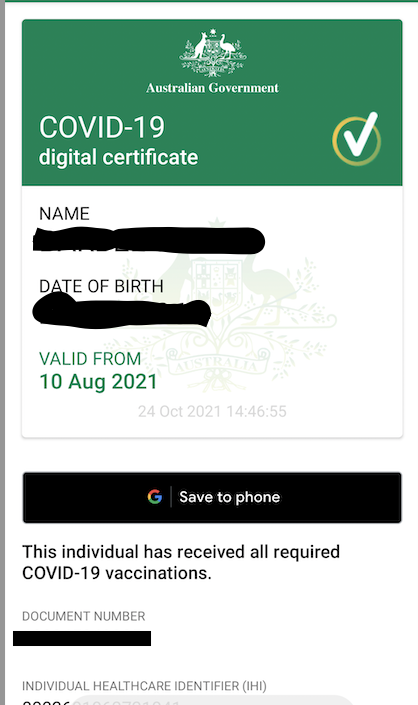
Once your myGov is linked to your Medicare details, you can download your  Covid 19 digital certificate. You can also download the digital certificate to  your phone's digital wallet ​ ​to make it easier and quicker to find when you need it​.
COVIS 19 certificate
Picture
​
You can also link your Centrelink details to your myGov account.  Once you are linked you can:
  • Claim payments
  • Manage all the documents
  • Report employment income
  • Manage your Centrelink money
 There are loads of other Australian Government agencies you can link with through your myGov account if you choose to.  myGov is convenient way to access and manage your information with those other agencies.  Check them out!

1 Comment

Choosing your own supports

1/9/2021

2 Comments

 
Banner with words Choosong your own supports and aan image of 6 different hands placed flat on a surface.
Peta’s support workers assist her with some of her household tasks, keeping track of her emails and bills, going to appointments and getting out and about in her community. 
Peta says:

‘That’s been lovely.  Having someone to take you out. It makes me feel good and happy and be a complete new Peta’

​​Peta says that it hasn’t always been like that.  In the past, she had no say in who would be assisting her, or when they would come.  Often they were casual ‘fill ins’ that she didn’t know before they arrived, and they were often very late.  ​
Peta and her Support Coordinator sitting on a lounge at Peta’s home.  They are working on a laptop and are facing each other
Peta has worked with her Support Coordinator to identify what she would like in a support worker, when she would like them to come and what they will assist her with.  Peta interviews potential workers and then chooses the people she feels will be right for her:
​‘We had a talk after and we spoke about the support workers that we had just seen. I thought Pauly was very nice, and S, and L. No, not L.’

Choosing your own supports

​People tell us that their support workers are often involved in very personal parts of their lives.  They rely on them in very vulnerable times when they need assistance the most.  They can be the difference between a bad day and an awesome day.  
Support workers are often key tools in assisting with achieving goals and getting on with living our best lives. We know that people often spend a lot of time with a support worker, so having the right person is important.
Here are our top 7 things to think about when choosing your support worker:
  1. ​Know what you want the support worker to do
  2. Decide when and where you need supports
  3. Decide what skills and qualities you want in your support worker
  4. Know how much you are willing/can afford to pay
  5. Know where to find and engage your support workers
  6. Plan for meeting and interviewing
  7. Know how to make an agreement.​
clipboard with the words To do
a red question mark on top of a pile of white question marks
​1. Know what you want the support worker to do
​
Many people use the funds in their NDIS Plan to engage support workers to assist with a huge range everyday activities including things like personal care, cleaning and gardening.  Some support workers also assist with getting out and about in the community and helping with building skills.
Perhaps you just want to be able to get out of bed in the morning.  Do you want to be able to pursue your hobbies, play sports, try new things or learn something new? Do you need a hand to help keep things organised, like your appointments or your bills?
Have a think about what your goals are; what do you want to achieve, what assistance you need and how a support worker might be able to help you to do that
a hand holding a compass
2. Decide when and where you need support
  • Do you need support every day or just a few days every now and again?  Morning, afternoon, overnight?
  • Do you need someone who is flexible or do you prefer set times on certain days?
  • Do you want an organisation to organise when your support workers come or do you want to do that yourself?
  • Do you want support at home, out and about, in the library or the gym?
  • If you are going out, do you need your support worker to drive you ​
 Also think about what you will do in an emergency or if your support workers calls in sick.

a wall of old woodworking tools
3. Decide what skills and qualities you want in your support worker
It is likely that you will spend quite some time with your support worker, so it’s important that they are the right fit for you and for your lifestyle.
  • Do you want them to be younger or older?
  • Do you prefer them to be talkative or quiet?
  • Do you want them to share your interests?
  • Do you want them to introduce you to new things?
  • Do you want them to have lots of experience supporting people with disability or would you prefer to train them for what you need?
  • Are there any specific skills or training that you need them to have (for example, will they need to be able to use a computer, to assist with bowel or catheter care etc)

Piles of Australian dollars
4. Know how much you are willing/
​can afford to pay


Look at your NDIS budget and work out how much funding you have available to pay your support worker.
  • How much do you want to pay them and how much will the charge you?
  • How much is the NDIS willing to pay?
  • Is the provider open to negotiating the rate?
  • How is your NDIS Plan managed?  
If your Plan is NDIA Managed, you will need to choose your support workers from organisations that are registered with NDIA.
  
If your Plan is Plan Managed or you are managing your Plan funds yourself, you have more choices about who you want to provide your support. You can also try to negotiate more easily.  If your support worker is inexperienced, you might not want to pay maximum amounts; or if your worker has loads of experience you might want to pay more.

Note, that for people who have their NDIS plan plan managed, there are 
upper limits that the NDIA will pay  (and they might change over time).

Remember that often there are different rates for different times of the day and week.
Remember that there is also an industrial award that sets minimum pay rates for support workers.
5. Know where to find and engage your support workers
  • Do you want to be able to find and engage your support workers yourself, or do you want to use support workers provided by an organisation?  
  • Do you want to directly employ your support workers or do you want contractors?
woman using her hands making googly eyes
There are laws that set out responsibilities when engaging other people to do work. These laws outline obligations such as pay rates, tax, GST, insurances, what happens if someone is injured, superannuation etc.
These responsibilities change depending on if the person is working as an employee for an organisation or individual or if they are working as self-employed contractor.
It’s important to be clear about your legal obligations if you are engaging your support workers directly yourself rather than through an organisation.
​

Where to find support workers?
Traditionally support workers worked for disability support organisations and  you can find workers by contacting those organisations.
Now, lots of people prefer to find their support workers themselves.
Some places you can look for support workers may also include:

  • university or TAFE student association
  • ask your friends, extended family and neighbours if they know anyone
  • people from your church or faith community, or a social group or club you go to
  • ask your therapists or other support workers you know if they know anyone who might be interested
  • through a platform such as HireUp, Like Family, Care seekers or Mable
  • advertise on Gumtree, in your local paper, or through employment websites like Seek (be careful about how much personal information you share in your advertisement)​
back of three people sitting on a bench one has the rainbow flag over their shoulder
6. Plan for meeting and interviewing 
Most people prefer to interview their potential support workers before agreeing to work with them.
You can organise to meet someone by phone, online (through face time, Skype or Zoom), email or in person.

This will give you the opportunity to ask them about:

  • their experience with people with a disability
  • their qualifications and other skills,
  • maybe their find out about their hobbies and interests.  
  • It also give you the chance to see if think you will get along.
Think about questions you would like to ask them beforehand and maybe write them down.
 

Also be mindful of things that are not ok to ask in an interview, because they might be considered private or could be seen as being discriminatory.
If you have decided to ask a disability support organisation to provide your support workers, ask the organisation about how you can meet and interview potential support workers before they commence working with you.
Some more tips for meeting, interviewing and deciding on potential support workers 

  • Be careful when advertising and meeting people for the first time to keep yourself safe
  • If you are meeting face to face - meet  in a public place the first time – for example, at a library, in a café or at the pub
  • Think about questions you would like to ask them and what would you like to know about them.
  • Ask for contacts for their referees – so you can find out a little bit more about them and what they are like to work with
  • Check out if they have a current NDIS Worker Check , First Aid Certificate, drivers licence and car insurance (if you will be needing them to help with transport)
  • Check if there have been any concerns with their work in the past or if they are not allowed to work as a support worker: 
  • You might like to take a friend or someone you trust with you so that you can hear their thoughts on the person as well ​

4 tumbs up made by for different coloured hands in top of a desk
7. Know how to make an agreement
Once you’ve decided on your new support worker/s, it’s a good idea to have a written agreement in place between you and your support worker or their organisation that you both agree to and sign.
The agreement should set out things like:
  • What the support worker will assist you with and when
  • Any expectations about how you will treat each other
  • How much you will pay them and how you will pay them
  • What to do if things go wrong
  • How to end or change the agreement
  • Any contact details for you, the person and emergency contact
  • Space for signatures and dates 
If you are directly engaging your support worker, it should also include things like:
  • Who is responsible for paying income tax, GST, superannuation etc
  • Any insurance arrangements and who is responsible for those

Finally, do you know that all people who work with people with disability need to complete the NDIS Safeguard Commission’s Worker Orientation Module ‘Quality, Safety and You’?

The course is free and a Certificate of Completion is provided on completion. can ask your worker to show you their certificate. If they don’t have one, they can do the training for free.
2 Comments
<<Previous
Forward>>

    Categories

    All
    AT (Assistive Technology)
    Government
    Home & Community
    NDIA News + Updates

    Archives

    June 2022
    April 2022
    February 2022
    November 2021
    October 2021
    September 2021
    August 2021

    RSS Feed

For more information about the NDIA and our registration please click here​
Picture
For a telephone interpreter call
TIS: 13 14 50
​and ask them to call us.
NDIS Registration Number: 405 003 6622

For Plan Management Services: [email protected]

Contact Us

phone:
Donna   0432 414 210
Barbel   0468 312 515 
Diana    0450 739 514

PO BOX 882
Marrickville NSW 1475  
​
futures in sight logo
 SoverACKNOWLEDGEMENT
We acknowledge that our work is conducted on the lands of Aboriginal and Torres Strait Islander nations.
We pay our respects to Elders past, present and future, for they hold the memories, traditions, Cultures and aspirations of Aboriginal and Torres Strait Islander communities. Sovereignty was never ceded
. 
​futures in sight - copyright: 2024
  • Welcome
  • News
  • Plan Management
    • How to choose the plan manger that is right for you?
    • Your NDIS Budget
    • in focus - plan management
    • What does that mean?
  • Coordination of Support
    • Brian's story
    • Brad's story
    • Georgia's story
    • Ohsha's story
  • About us
    • Our team
    • How we work
    • Annual Survey Results
  • Resources
    • Covid 19
  • Contact Us